
Medical Marketing
5 Unique Features of Our AI Receptionist Integration Process for Medical Practices
April 22, 2026 · Zack Siegel · 6 min read
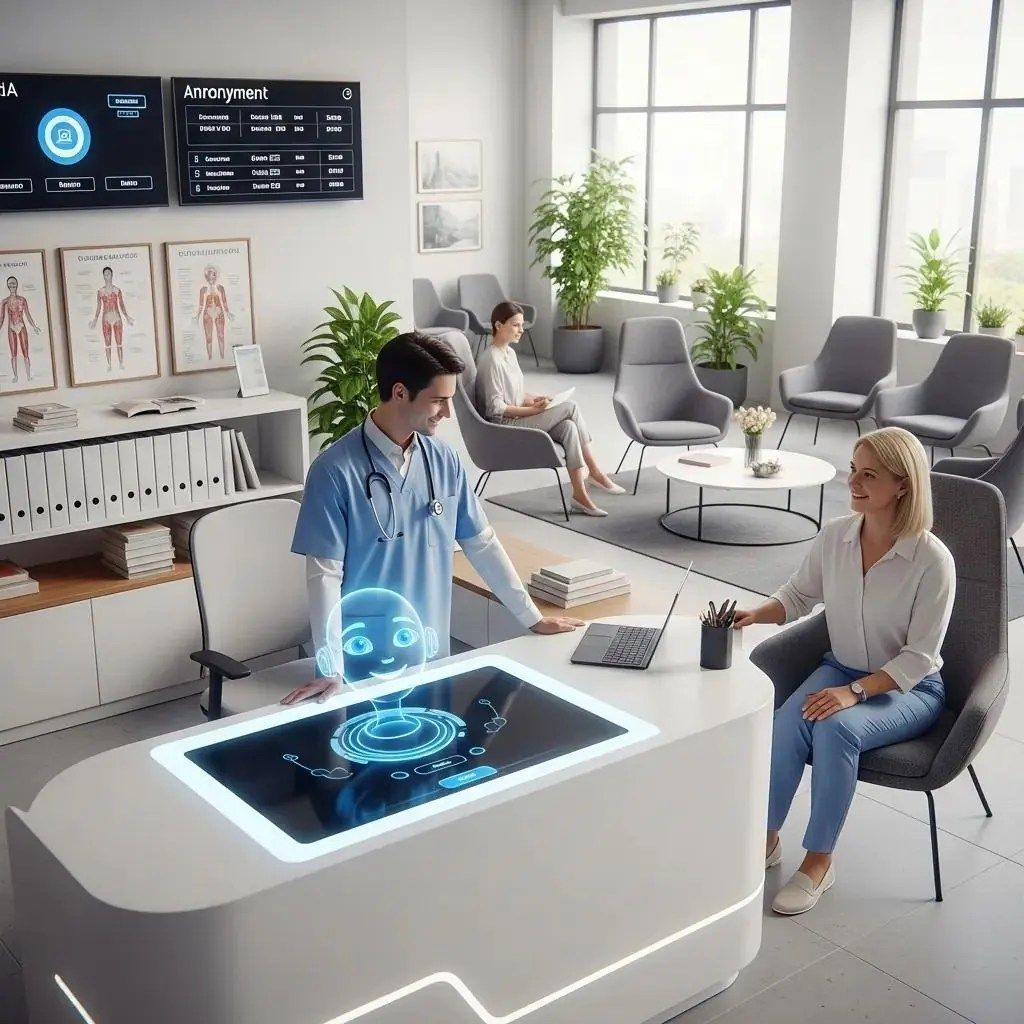
AI integration has transformed healthcare operations. Our AI receptionist streamlines the intake process, enhances patient engagement, and increases clinic efficiency. This article examines five features: appointment scheduling and reminders, tailored recommendations, automated data collection and analysis, improved patient interaction, and integrated applications. Understanding these capabilities helps practices resolve operational bottlenecks and strengthen patient acquisition efforts.
Appointment Scheduling & Reminders
Automated scheduling reduces no-shows and improves patient satisfaction. Our AI handles bookings and issues timely reminders so patients remain informed. The resulting efficiency saves staff time and optimizes patient flow within the clinic.
By reducing manual scheduling tasks, practices can reallocate staff time to clinical care instead of administrative duties.
Tailored Recommendations
By analyzing patient data, the AI delivers personalized recommendations that improve satisfaction and demonstrate the practice’s clinical expertise. This level of customization enhances the patient experience and supports the practice’s leadership in care delivery.
These recommendations also help reframe marketing challenges as structural issues, enabling more effective patient acquisition strategies. Integrating AI into patient interactions creates a more engaging and responsive care environment.
Automated Data Collection and Analysis

Automated data collection and analysis reveal patient behavior patterns and improve resource allocation. Our AI efficiently gathers and processes patient information, producing insights that support targeted marketing and service adjustments. This data-driven approach helps practices identify trends and improve patient outcomes.
These insights enable operational refinement and ensure resources are directed where they are most needed.
This observation aligns with research demonstrating that automated data collection improves efficiency and analysis in healthcare.
Improved Patient Interaction
Improving patient interaction is central to the AI receptionist. Available 24/7, the system answers queries in real time, provides immediate assistance, and strengthens the practice’s credibility. Continuous availability enhances satisfaction and trust.
AI integration streamlines communication, which is essential in a fast-paced healthcare environment. As adoption grows, emphasis on patient engagement will expand.
Integrated Applications
Our AI receptionist integrates with existing applications to support a cohesive marketing strategy. System interoperability improves service delivery and patient engagement by aligning workflows across platforms. Using integrated applications helps practices streamline operations and deliver a more holistic patient experience.
Interconnected systems enable data sharing across platforms, help maintain accurate patient records, and improve overall operational efficiency.
How Does Our AI Receptionist Diagnose Hidden Revenue Leaks in Clinic Intake Systems?
Our AI identifies hidden revenue leaks by automating scheduling, engaging patients in real time, and collecting and analyzing patient data to locate inefficiencies in the intake process.
This approach aligns with advanced AI solutions that address revenue cycle challenges and improve patient engagement.
What Are Common Revenue Leak Causes in Medical Practice Patient Acquisition?
Common causes include inconsistent bookings, low lead conversion, and missed calls. These issues reduce revenue and should be addressed proactively.
How Does AI Receptionist Integration Detect and Address These Revenue Leaks?
The integration uses predictive analytics together with automated scheduling and real-time engagement to detect patterns that cause revenue loss. Identified inefficiencies enable practices to implement corrective measures quickly.
In What Ways Does Our AI Receptionist Expose and Resolve Operational Bottlenecks?
The AI exposes and resolves operational bottlenecks by automating scheduling and reducing administrative workload. This optimizes patient interactions and improves overall clinic efficiency.
Which Operational Bottlenecks Impact Patient Flow and Appointment Scheduling?
Bottlenecks include scheduling delays, excessive staff workload, and inefficient data collection. Addressing these issues improves patient experience and smooths clinic operations.
How Does AI Automation Streamline Clinic Intake System Efficiency?
AI automation digitizes administrative tasks, improves patient experience, and streamlines workflow, enabling staff to prioritize patient care over administrative duties.
How Does Our AI Receptionist Ensure Compliance in Medical Practice Automation?
To ensure compliance, our AI implements strong encryption and access controls to protect patient information and support regulatory adherence.
Studies on healthcare compliance further emphasize the role of automation in maintaining regulatory standards.
What Are Key Compliance Challenges in AI Receptionist Deployment?
Key challenges include data privacy, regulatory alignment, and staff training. Addressing these areas is essential for successful deployment and ongoing operation.
How Does Our Integration Maintain Regulatory Standards and Patient Privacy?
We maintain regulatory standards and privacy through transparent data handling, routine audits, and continuous monitoring. These safeguards protect patient information while enabling efficient AI operations.
How Does AI Receptionist Integration Improve Lead Conversion and Patient Engagement?
AI integration improves lead conversion and engagement with features such as 24/7 availability, automated reminders, and personalized recommendations. These capabilities enhance the patient experience and increase conversion rates.
What Features Enhance Lead Conversion Compared to Human Receptionists?
Compared with human receptionists, AI provides immediate responses, consistent follow-up, and data-driven insights, creating a more efficient patient acquisition process. This allows practices to engage potential patients more effectively.
How Does AI Support Scalable and Predictable Patient Acquisition?
AI supports scalable, predictable acquisition by automating scheduling, applying predictive analytics, and integrating systems. This enables practices to handle growing volumes without sacrificing service quality.
What Scalability and Predictability Benefits Does Our AI Receptionist Provide for Medical Practices?
Our AI provides scalability and predictability: it handles high patient volumes, forecasts patient needs, and reduces administrative burden, enabling growth without compromising service quality.
How Does AI Receptionist Integration Support Growing Patient Volumes?
The integration supports growth through scalable operations and predictive engagement, enabling practices to manage increased demand while maintaining care standards.
What Metrics Demonstrate Improved Patient Flow and Appointment Automation?
Metrics include reduced missed calls, improved lead conversion, and higher patient satisfaction. These indicators demonstrate the impact of AI on clinic operations.
To enhance your practice’s online presence, review SEO strategies tailored for medical practices. Optimizing website content can increase visibility and attract more patients.
Frequently Asked Questions
What types of medical practices can benefit from AI receptionist integration?
AI receptionist integration benefits diverse practices—small clinics, large hospitals, dental offices, and specialty practices. By automating administrative tasks and improving patient engagement, these systems streamline operations regardless of size. Systems are adaptable and can be configured to meet specific practice requirements, improving satisfaction and efficiency.
How does AI receptionist integration enhance patient data security?
Integration enhances data security through strong encryption and strict access controls. Systems are designed to comply with regulations such as HIPAA. Regular audits and monitoring reinforce these safeguards, preserving patient trust while enabling efficient operations.
Can AI receptionists handle multiple languages for diverse patient populations?
Many AI receptionists offer multilingual capabilities to communicate with diverse patient populations. This reduces language barriers, improves access to care, and helps practices broaden their reach.
What training is required for staff to work alongside AI receptionists?
Staff training focuses on system functions, interpreting AI insights, managing exceptions, and preserving the human aspects of care. Ongoing support ensures staff adapt and the integration remains seamless within daily operations.
How does AI receptionist integration impact patient wait times?
AI reduces wait times by streamlining scheduling and communication. Automated reminders and real-time engagement lower no-shows and help allocate resources more effectively, which smooths clinic flow.
What are the cost implications of implementing an AI receptionist?
Costs vary by system and practice size. While setup requires investment, reduced administrative overhead and improved patient engagement often produce long-term savings. Increased retention and acquisition can contribute to overall revenue growth.
How can practices measure the success of their AI receptionist integration?
Measure success using patient satisfaction scores, no-show rates, and lead conversion. Track these metrics over time and collect staff and patient feedback to identify improvements and ensure the system meets practice needs.
Conclusion
Integrating an AI receptionist delivers measurable benefits: improved patient engagement, streamlined operations, and stronger data security. Automation reduces administrative bottlenecks and lets staff concentrate on clinical care. Adopting this technology positions practices for sustainable growth and a better patient experience. Discover how our AI solutions can transform your practice today.
About the author
Zack Siegel
Founder & CEO of Think Bullish. Since 2017 he's helped 441+ medical practices grow with done-for-you advertising, an A.I. front desk, and full-funnel patient-acquisition systems.
More from Zack Siegel →