
Healthcare Marketing
June 4, 2026 · Zack Siegel · 7 min read
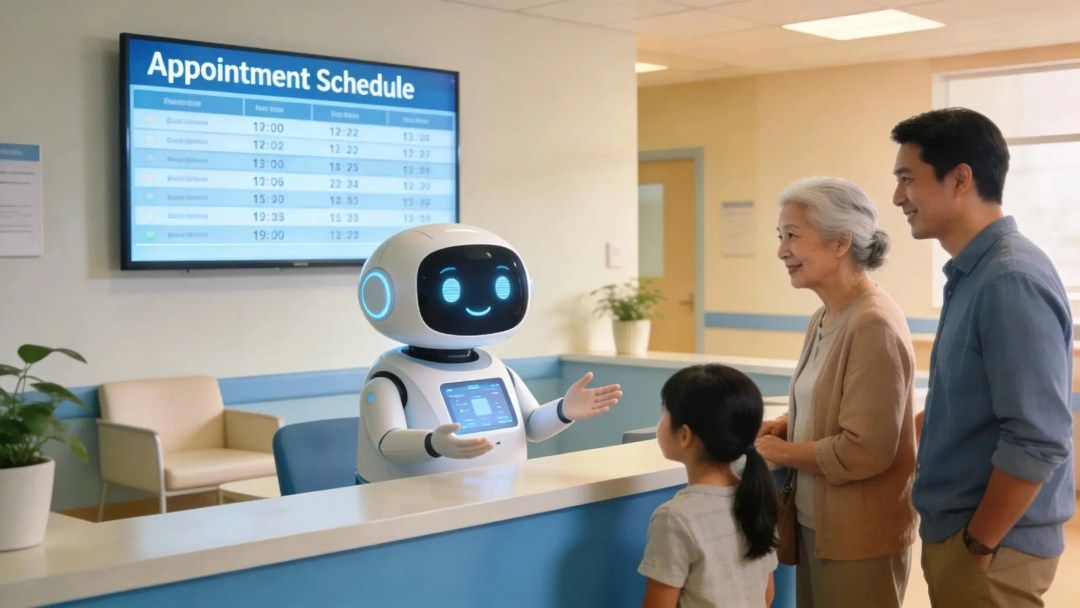
Unlocking Higher Lead Conversion: How Our AI Receptionist Outperforms Competitors in Healthcare
By Zack Siegel, Think Bullish LLC
Lead conversion is critical for clinics aiming to grow patient volumes and improve operational efficiency. Medical AI receptionist technology offers a practical route to outperform traditional methods by automating intake, reducing missed opportunities, and standardising responses. This article explains how our AI receptionist improves conversion rates, tackles common intake challenges, and delivers features that drive booking consistency.
We also compare our solution to competitors and identify the capabilities that distinguish our offering in this digital shift.
As healthcare continues to evolve in complexity and scale, the role of technology has become increasingly vital. One such technological innovation, the AI receptionist, is revolutionary in transforming patient engagement, lead capture, and operational workflows.
Beyond just answering calls, AI receptionists now utilise advanced natural language processing and machine learning techniques to interact seamlessly with patients, tailoring conversations based on individual needs and histories. This adaptation not only improves patient satisfaction but also ensures that healthcare providers maximise their appointment booklets and revenue streams.
The following insights explain how AI can transform healthcare operations while addressing specific challenges clinics face in an increasingly digital landscape.
AI and Robotics for Healthcare Automation
Advances in artificial intelligence and robotics are driving efforts to integrate automation into healthcare settings, enabling faster, more accurate patient triage and appointment management.
Robotic Integration in Healthcare: Automating Receptionist Tasks for Enhanced Patient Interaction and Appointment Management, A Bandyopadhyay, 2025
What Are the Key Challenges in Clinic Intake Systems Affecting Lead Conversion?
Clinic intake systems often undermine lead conversion through communication barriers, inefficient lead management, and inconsistent follow-up. For instance, patients may face difficulties navigating complex phone menus or experience delays in receiving responses, which can lead to frustration and appointment cancellations.
Moreover, data silos between reception, scheduling, and medical departments can disrupt the seamless flow of patient information, resulting in missed opportunities for timely engagement.
Another critical challenge is the variability in human receptionist availability and performance, which can be affected by workload, training, and turnover. This inconsistency often leads to varying patient experiences and potential loss of leads. Recognising these failure points is essential for designing targeted improvements that recover lost opportunities and enhance the patient journey.
The following discussion further examines the complexities of integrating AI into healthcare operations and how technological advancements can bridge gaps in traditional systems.
AI in Healthcare Call Centers: Efficiency, Ethics, and Care
The rapid adoption of artificial intelligence in healthcare call centers creates a central challenge: balancing operational efficiency with ethical, equitable, and patient-centred care. Navigating AI Transformation in Healthcare Call Centers: Balancing Efficiency, Ethics, and Human Expertise in HealthConnect’s Transition, 2026
How Do Revenue Leaks and Operational Bottlenecks Impact Patient Acquisition?
Revenue leaks and bottlenecks directly reduce patient acquisition. For example, high no‑show rates commonly result from inadequate appointment reminders and weak scheduling or follow-up processes, which lower clinic capacity and revenue. Inefficient intake workflows can also cause delays in patient registration, leading to patient dissatisfaction and drop-offs.
Furthermore, when clinics rely solely on manual systems for lead tracking, they risk missing critical touchpoints with prospective patients, which diminishes the likelihood of successful booking conversions. Bottlenecks can arise from outdated technology, overloaded staff, or fragmented communication channels, each contributing to longer wait times and increased administrative burdens, ultimately affecting the clinic’s growth and patient care quality.
How Our AI Receptionist Solution Improves Lead Conversion
Our AI receptionist is engineered to address these challenges comprehensively. By leveraging cutting-edge AI, it ensures 24/7 availability, enabling patients to engage and schedule appointments outside regular office hours. The system employs sophisticated natural language understanding to interpret diverse patient inquiries and respond accurately, offering a conversational and personalized experience that mirrors human interaction.
Integration with existing practice management software creates a seamless workflow that automates appointment bookings, sends timely reminders, and facilitates easy rescheduling or cancellations — all designed to reduce no-show rates. Additionally, our analytics dashboard provides actionable insights into patient behaviour, call patterns, and conversion metrics, empowering clinic managers to make informed decisions and continually refine intake strategies.
Key Features Driving Booking Consistency
- Advanced Natural Language Processing: Understands and responds to a wide range of patient queries in multiple languages, breaking down communication barriers.
- Seamless Integration: Connects with EHRs and scheduling systems ensuring real-time updates and reducing double bookings or errors.
- Automated Follow-up: Sends appointment reminders and personalized messages to enhance patient engagement and reduce cancellations.
- Compliance and Security: Built on HIPAA-compliant frameworks with encrypted data handling to maintain patient confidentiality.
- Human Escalation Paths: Offers smooth transfer to live agents for complex scenarios, ensuring no patient query goes unresolved.
Frequently Asked Questions
1. How can AI receptionists improve patient engagement in healthcare?
AI receptionists improve engagement by offering 24/7 access for enquiries and appointment booking. They handle large volumes of interactions, reduce unanswered contacts and shorten wait times. Personalisation based on patient data supports more relevant conversations and better follow-up, strengthening patient relationships and increasing lead conversion.
2. What types of healthcare facilities can benefit from AI receptionist technology?
Hospitals, outpatient clinics, dental practices, mental health facilities and other appointment-driven organisations can benefit. AI is especially effective for high-volume practices that struggle with consistent patient communication, as it streamlines workflows across voice and chat channels.
3. What specific features should a healthcare AI receptionist have?
Key features include natural language processing to interpret patient enquiries, integration with practice management software, and automated appointment scheduling. Analytics on interactions, multilingual support, HIPAA-compliant data handling, and smooth handoff to human agents for complex cases are also important for a reliable patient experience.
4. Is training necessary for staff when implementing AI receptionists?
Some staff training is recommended to maximise value. Training usually covers interacting with the AI, managing escalations to human agents, and interpreting AI analytics so teams can act on insights and improve workflows.
5. What does the implementation process of an AI receptionist look like?
Implementation typically begins with an assessment of current intake processes and pain points. Providers then work with vendors to customise the solution, integrate it with existing systems, run pilot tests, and train staff. Ongoing evaluation and optimisation ensure the AI adapts and improves conversion over time.
6. Can AI receptionists comply with healthcare regulations like HIPAA?
Yes. Reputable AI receptionist solutions can be built to meet HIPAA and other regulatory requirements by implementing encryption, secure storage and access controls. Clinics should verify vendor compliance and data protection measures before deployment.
7. How do AI receptionists compare with traditional human receptionists?
AI receptionists operate continuously and scale to handle many interactions at once, while human staff excel at empathy and complex problem-solving. A hybrid approach—using AI for routine enquiries and humans for nuanced care—often delivers the best results for patient experience and operational efficiency.
Comparative Advantages Over Competitors
While several AI receptionist solutions exist in the market, our technology stands out due to its unique blend of advanced features and user-centric design. Our solution emphasises ease of integration, allowing clinics to adopt AI without extensive IT overhaul. Moreover, our AI’s contextual understanding and adaptive learning capabilities ensure that over time, conversations become more natural and patient-specific, outperforming more rigid or template-based systems.
Another point of differentiation is our commitment to data privacy and compliance, with a robust framework that surpasses industry minimums, giving healthcare providers confidence in security. Customer support and continuous feature updates further ensure our clients remain at the forefront of healthcare automation innovation.
Conclusion
Integrating AI receptionists can improve patient lead conversion by addressing intake challenges and standardising communication. With 24/7 availability, streamlined contact paths, and reduced wait times, these solutions add measurable value to patient interactions.
As healthcare providers face mounting pressures from patient demands and operational complexities, embracing AI receptionist technologies becomes not just advantageous but essential for sustaining growth and delivering superior care.
To learn how our AI-driven technology can help your practice increase patient acquisition, schedule a discovery call to leanr more.
About the author
Zack Siegel
Founder & CEO of Think Bullish. Since 2017 he's helped 441+ medical practices grow with done-for-you advertising, an A.I. front desk, and full-funnel patient-acquisition systems.
More from Zack Siegel →