Boost Patient Recruitment with AI

AI-powered recruitment transforms how regenerative medicine practices attract and convert patients. By combining precision advertising, automated engagement, predictive scoring, and calendar integration, clinics can generate higher-quality leads, shorten time-to-booking, and increase patient lifetime value. This guide walks practice owners through practical, therapy-specific tactics for stem cell, PRP, exosomes, NAD+, and peptide treatments—covering targeting and conversational AI, CRM handoffs, KPI definitions, vendor evaluation checklists, and ethical guardrails. Read on for an actionable roadmap that balances technical setup, day-to-day workflows, and the right questions to vet partners who must deliver measurable growth.

Ready to Transform Your Patient Recruitment?

Discover how Think Bullish’s AI Growth System can deliver higher-quality leads, faster conversions, and measurable ROI for your regenerative medicine practice.

What Is AI-Powered Patient Recruitment in Regenerative Medicine?

AI-powered patient recruitment uses predictive analytics, natural language processing, and automated outreach to find, qualify, and convert patients for treatments like stem cell therapy, PRP, exosomes, NAD+, and peptides. These systems analyze audience signals and clinical eligibility to deliver hyper-targeted ads, conversational screening, and dynamic lead scores that surface the most-ready prospects. The outcome: better lead quality, faster conversion cycles, and more efficient use of clinical time versus broad, manual marketing. That efficiency is why clinics often see stronger ROI when recruitment is automated end-to-end and tuned to each therapy’s specific barriers.

In practice, AI pairs creative optimization with automated education and scheduling to shorten time-to-treatment and lift booking-to-treatment rates. Next we’ll break down the concrete mechanisms—targeting, conversational AI, and predictive scoring—that drive those gains.

How Does AI Improve Lead Generation and Patient Acquisition?

AI improves lead generation and acquisition by combining data-driven targeting, conversational interfaces, and predictive lead scoring to surface patients who match treatment profiles and readiness signals. Targeting narrows ad exposure to micro-segments likely to engage, conversational AI fields questions and screens eligibility 24/7, and predictive scores rank leads so staff can focus on the highest-value prospects. A typical funnel looks like: hyper-targeted ad → automated chat screening → scored lead into CRM → automated booking → pre-appointment education that reduces no-shows. Together these steps compress conversion timelines and raise lead-to-treatment ratios—setting a clear baseline for measurement and optimization.

Importantly, AI-driven programs close the loop by feeding booking and treatment outcomes back into targeting models. That continuous learning reduces cost-per-qualified-lead and improves campaign performance over time.

Why Is AI Different from Traditional Regenerative Medicine Marketing?

AI replaces manual segmentation, one-size-fits-all creative, and ad-hoc follow-up with scalable personalization, automated workflows, and real-time optimization. Traditional campaigns rely on broad demographics and human follow-up, creating slow qualification and inconsistent patient experiences. AI enables individualized messaging, persistent multi-channel outreach, and continuous tuning—so clinics can run multiple therapy funnels without a proportional rise in staff. That structural difference both improves efficiency and makes KPI-driven vendor evaluation possible.

How Does Think Bullish’s AI Patient Coordinator™ Enhance Regenerative Medicine Marketing?

Think Bullish offers an AI Growth System built to scale practice growth: hyper-targeted ads, done-for-you content, and 24/7 AI engagement that move prospects through the funnel. Our AI Patient Coordinator™ works with AI Front Desk Advertising to create a seamless ad-to-appointment flow: targeted creative drives qualified traffic, the AI Patient Coordinator™ handles automated follow-up (calls, texts, emails) and qualification, and CRM workflows manage booking and pre-visit education. The result is less repetitive work for staff and higher appointment conversion. When evaluating vendors, prioritize clean ad-to-CRM handoffs, multi-channel outreach, and consistent lead quality evidence.

Below is a concise feature-to-value mapping for the AI Patient Coordinator™ so buyers can see how capabilities translate into outcomes.

FeatureFunctionBenefit
AI Front Desk AdvertisingHyper-targeted ad campaigns and creative productionDrives more therapy-specific, qualified traffic
24/7 AI Patient Coordinator™Automated calls, texts, and emails for follow-upMaintains engagement and captures intent outside office hours
Automated Patient QualificationScreening questionnaires and financial readiness checksFilters unqualified leads and prioritizes high-LTV prospects

What Are the Features of AI Front Desk Advertising and Automated Patient Screening?

AI Front Desk Advertising pairs precision targeting with therapy-specific creative—video and copy—and automated screening sequences to capture intent and qualify leads before human contact. Creative is continuously optimized against performance signals so messaging aligns with what motivates each therapy’s audience. Structured screening assesses eligibility, contraindications, and financial readiness. Multi-channel follow-up—SMS, email, and voice—keeps prospects engaged with clear education sequences that reduce confusion and build trust. Together, these features lift lead quality and shorten conversion windows.

How Does AI Automate Lead Qualification and Appointment Booking?

AI automates qualification and booking with a simple workflow: targeted ad capture → conversational screening that records intent and eligibility → automated lead scoring to prioritize outreach → calendar integration that shows available slots and confirms bookings. Follow-up automation sends reminders and educational content to reduce no-shows, while CRM sync gives staff a single view of lead history and treatment preferences. That automation cuts scheduling friction, raises booking rates, and lets clinics scale without linear front-desk hires—making it easier to trace bookings back to campaign and qualification inputs for ROI measurement.

Which Regenerative Therapies Benefit Most from AI Patient Recruitment?

AI recruitment works best for therapies with distinct education needs, eligibility rules, or high lifetime value—like stem cell therapy, PRP, exosomes, NAD+, and peptide protocols. Each has its own challenge: complex eligibility for stem cell, short decision windows for PRP, trust requirements for exosomes, and subscription dynamics for NAD+ and peptides. AI addresses these by tailoring messaging, automating education funnels, and prioritizing leads who signal financing readiness or treatment intent. The table below summarizes challenges and how AI helps.

TherapyRecruitment ChallengeHow AI Helps / Key Benefit
Stem CellComplex eligibility and regulatory-sensitive messagingAutomated triage and education save clinician time and surface qualified candidates
PRPShort decision window and high conversion on immediate interestRapid chat response and quick booking reduce time-to-treatment
ExosomesHigh trust and credibility requirementsMulti-step education and testimonial-led creative build confidence
NAD+ / PeptidesSubscription and retention-focused modelsPredictive analytics identify candidates for maintenance plans and upsells

How Does AI Support Stem Cell Therapy Patient Acquisition?

For stem cell therapy, AI delivers staged education, eligibility screening, and carefully framed messaging to address scientific complexity and regulatory sensitivity. Automated intake captures medical history and contraindications so clinical staff spend consult time on pre-qualified prospects. Targeted content positions the clinic as a credible educator, while predictive scoring highlights high-LTV candidates for prioritized outreach—improving consult efficiency and responsibly scaling high-value offerings.

What Are AI Strategies for PRP, Exosomes, NAD+, and Peptide Therapy Marketing?

PRP strategies prioritize speed: capture interest and convert with immediate chat and one-click booking. Exosome campaigns focus on credibility with multi-touch education and strong trust signals. For NAD+ and peptides, AI supports subscription models—predicting churn, automating refill reminders, and surfacing upsell opportunities. Examples: dynamic PRP ad variants emphasizing recovery time, sequenced exosome emails addressing safety, and behavior-triggered campaigns that re-engage lapsed NAD+ subscribers. These tactics use predictive analytics and tailored content to prioritize treatment-ready leads and feed measurable performance tracking.

How Can Regenerative Medicine Practices Measure ROI and Success with AI Recruitment?

Measuring ROI means tracking funnel-level KPIs—cost per acquisition, lead-to-booking, booking-to-treatment, patient lifetime value, and time-to-booking—and comparing them to historical baselines. Implement attribution that ties ad spend and campaign variants to booked treatments and revenue, and focus on lead quality trends rather than volume alone. Validate vendor claims with transparent data access, cohort analysis, and third-party verification where possible. A weekly dashboard and reporting cadence give teams the signals needed to optimize campaigns.

Below is a KPI reference table with clear definitions, calculations, and actions clinics can use to evaluate vendor performance.

KPIDefinition / CalculationTarget Benchmark / Action to Improve
CAC (Customer Acquisition Cost)Total marketing spend / new paying patientsCompare to treatment LTV; lower by improving conversion and ad targeting
Lead-to-Booking RateBookings / leads capturedRaise with faster follow-up and sharper qualification scripts
Booking-to-Treatment RateTreatments / bookingsIncrease via pre-appointment education and reminder sequences
Patient LTVAverage revenue per patient over relationshipGrow with retention programs and clear upsell paths

What Key Metrics Track AI-Driven Patient Growth and Lead Quality?

Track CAC, lead-to-booking, booking-to-treatment, average revenue per treatment, and time-to-booking—calculated consistently across campaigns. Compare CAC to therapy-specific LTV to judge profitability; use funnel rates to find where automation helps or needs tweaking. Time-to-booking often correlates with conversion—shorter response times usually improve booking-to-treatment. Clear definitions and regular reporting let clinics hold vendors accountable and iterate on campaign elements using data-driven priorities.

What Case Studies Demonstrate 7-Figure Growth Using AI Patient Acquisition?

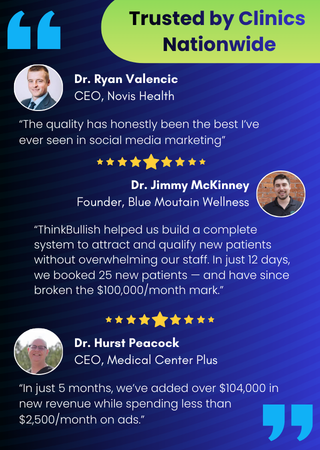
When you see case studies claiming seven-figure gains in months, ask for the underlying metrics: baseline revenue, timeframe, ad spend, patient mix, and attribution methodology. Think Bullish’s performance-based claims are starting points—require verifiable cohorts, contract milestones, and transparent reporting before relying on headline results. A vendor-validation checklist should include raw data access, independent reporting, and alignment with your clinic’s size and service mix so outcomes are comparable and actionable.

What Are the Ethical and Compliance Considerations for AI in Patient Recruitment?

Ethical and compliance issues center on patient privacy, informed consent, transparency about automated interactions, and adherence to advertising and telemarketing rules. Clinics must minimize data collection, secure storage, and clear consent flows for automated outreach while ensuring marketing claims are medically accurate. Disclose when patients are interacting with AI and offer straightforward opt-outs. These practices reduce regulatory risk and strengthen patient trust—which, in turn, improves long-term conversion.

The checklist below summarizes practical steps clinics should adopt to keep AI recruitment ethical and compliant.

  • Use explicit consent and clear opt-in flows for automated messaging to respect patient privacy.
  • Collect only necessary data and retain it only as long as required for qualification and scheduling.
  • Disclose automated interactions and provide fast escalation paths to human staff.
  • Validate advertising claims with clinical evidence and legal review to meet truth-in-advertising rules.
Following these steps reduces risk and prepares the practice to address specific regulations that commonly affect AI-driven medical marketing.

How Does Ethical AI Ensure Patient Privacy and Transparency?

Ethical AI enforces privacy and transparency through clear consent flows, data minimization, explainable decisioning, and simple opt-out options. Consent should describe what data is collected, how it will be used, and how patients can access or delete their information. Explainability practices give patients and clinicians an understandable rationale for automated recommendations. Secure storage, role-based access, and encryption limit exposure, and human escalation preserves clinical oversight. These measures protect trust while allowing clinics to leverage AI efficiently.

What Regulations Impact AI Use in Regenerative Medicine Marketing?

Relevant regulations include privacy laws, telemarketing restrictions, and truth-in-advertising standards. Clinics should consult legal counsel to interpret how these apply to automated outreach and medical claims. Privacy frameworks limit permissible uses of screening data, telemarketing rules restrict outbound calls and texts without consent, and advertising rules require substantiation for therapeutic promises. Because rules vary by jurisdiction, verify vendor compliance features—consent capture, data controls, and audit logs—before deployment.

What Future Trends Will Shape AI Patient Recruitment in Regenerative Medicine?

Near-term trends include wider use of large language models (LLMs) for personalized education, retrieval-augmented generation (RAG) for accurate clinical content, and richer multimodal engagement—voice, chat, and video—for pre-visit interactions. Predictive analytics will better identify patients likely to convert and stick with retention programs, while improved interoperability will smooth CRM and telehealth handoffs. Clinics that run small pilots and instrument outcomes now will be better positioned as these technologies and regulatory clarity mature.

How Will AI Adoption Evolve in Healthcare and Regenerative Clinics by 2025 and Beyond?

By 2025, AI will shift from point solutions to integrated growth systems that combine ad optimization, conversational engagement, and revenue analytics. Operationally, clinics will adopt staff-augmentation models where AI handles routine qualification and scheduling while clinicians focus on consults and care. Early adopters will win with faster time-to-booking, higher conversions, and stronger retention, while others will lean on third-party growth systems. Preparing data infrastructure and consent practices now eases future integration.

What Emerging AI Technologies Will Enhance Patient Engagement and Practice Growth?

Emerging tools include LLM-driven personalized education, conversational voice agents for high-touch follow-up, and predictive scheduling that anticipates no-shows and optimizes slots. Multimodal AI can combine video education with chat FAQs to raise comprehension and trust before consults. These innovations reduce friction in the conversion path and create steadier revenue. Practices that prioritize data quality and workflow alignment will see the biggest gains—start with small experiments to validate impact.

Think Bullish offers an AI Growth System combining hyper-targeted ads, done-for-you content, 24/7 AI Patient Coordinators™, and an integrated CRM. When evaluating such offers, align pilot goals with the ROI framework above and document expectations for lead volume, conversion lift, and contract terms tied to performance. If you’re exploring partners to accelerate qualified lead flow and practice growth, request a data-backed audit or demo that maps projected KPIs to your clinic’s baseline and clarifies any performance-based terms.

Frequently Asked Questions

What are the main benefits of using AI in patient recruitment for regenerative medicine?

AI improves targeting, raises lead quality, and reduces manual work. By analyzing signals and automating follow-up, AI delivers more qualified prospects and frees staff to focus on consults and care. The practical result is faster conversion, higher ROI, and more predictable patient volume.

How can clinics ensure compliance with regulations when using AI for patient recruitment?

Adopt strict privacy practices, capture explicit consent, and limit data collection to what’s necessary. Use clear opt-in flows for automated communications, run regular audits, and consult legal counsel to stay current on telemarketing and advertising rules.

What role does patient education play in AI-driven recruitment strategies?

Patient education builds trust and shortens the decision cycle. AI delivers tailored content—email, chat, or video—that answers common questions and addresses safety concerns. Better-informed prospects convert at higher rates and show up prepared for consults.

How can clinics measure the effectiveness of their AI recruitment efforts?

Track KPIs like CAC, lead-to-booking, booking-to-treatment, and patient LTV, and compare them to historical baselines. Use attribution to link ad spend to booked treatments and maintain a regular reporting cadence to guide optimizations.

What are the potential challenges clinics may face when implementing AI in patient recruitment?

Common challenges include data privacy, integration with existing systems, and staff training. Address these with secure data practices, careful API/CRM planning, and straightforward training so teams can use AI tools effectively.

How does AI enhance patient engagement throughout the recruitment process?

AI provides personalized, timely interactions—via chatbots, automated messages, and voice—24/7. That continuous engagement answers questions, captures intent, and guides prospects toward booking, reducing drop-off and improving conversion.

Conclusion

AI-powered recruitment changes how regenerative clinics attract, qualify, and convert patients—delivering better targeting, higher-quality leads, and more efficient operations. When implemented responsibly, AI reduces time-to-booking, raises booking-to-treatment rates, and improves practice economics. To see how this works for your clinic, request a demo of our AI Growth System and get a data-backed plan tied to your baseline KPIs.

Ready to Accelerate Your Practice Growth?

Don’t miss out on the future of patient acquisition. Partner with Think Bullish to unlock measurable growth and a steady flow of qualified patients.