Regenerative medicine sits at the intersection of rapid clinical progress and careful patient decision-making. Growing practices win by building trust, educating prospects, and qualifying candidates before they book. This article lays out practical strategies—AI-driven automation, evidence-first content, paid channel optimization, and compliance-minded messaging—that drive higher-quality consults and more predictable pipelines. Clinics that move past raw lead volume and adopt systems to screen clinical suitability, patient motivation, and financial readiness see better conversion, fewer cancellations, and less regulatory exposure. Read on for how AI changes intake workflows, which digital channels deliver the best ROI, how semantic SEO and content hubs capture high-intent organic traffic, and how virtual seminars plus pre-appointment education shorten sales cycles. We also cover clear FDA/FTC steps and short case examples that show measurable gains from performance-focused, automated marketing. Throughout, we reference entity-driven tactics—semantic SEO, the Patient Recruitment Method™ and AI coordination—that clinics can apply immediately to improve bookings and patient quality.

Ready to Transform Your Patient Acquisition?

Discover how Think Bullish’s AI-driven strategies, evidence-first content, and performance-based marketing can deliver predictable patient bookings and elevate your clinic’s growth. Stop chasing leads and start building a qualified pipeline.
See how our AI Growth System integrates with your existing workflows to drive measurable results.

How Does AI-Powered Patient Acquisition Transform Regenerative Medicine Marketing?

AI-powered patient acquisition automates first contact, pre-qualification, and scheduling so clinics convert interested prospects faster and with greater clinical fit. Leads captured via ads or organic search are routed through conversational AI that answers outcome and risk questions consistently and with evidence-based education. The result: faster appointment throughput, fewer administrative bottlenecks, higher booking-to-treatment rates, and reduced no-shows. Deploying AI shifts teams from reactive intake to proactive patient coordination, freeing clinicians to focus on evaluation rather than triage. That sets up the next section on the AI patient coordinator’s specific role.

What Is the Role of the AI Patient Coordinator™ in Automating Patient Engagement?

The AI Patient Coordinator™ is the conversational front line that qualifies, educates, and schedules at scale using clinically-safe flows and tailored messaging. It asks targeted intake questions, surfaces the right educational assets, confirms basic eligibility, and offers available appointment windows while creating calendar events and reminders. By maintaining 24/7 engagement it cuts response time from hours to seconds and sends preparatory materials that reduce anxiety and no-shows. Clinics using conversational triage reliably see more booked consults because automated follow-up preserves interest and guides motivated prospects to scheduled evaluations.

How Does Automated Lead Qualification Improve Patient Conversion Rates?

Automated lead qualification applies a consistent scoring system—screening for clinical condition, motivation to pursue treatment, and financial readiness—to prioritize high-probability patients for immediate scheduling. The triple-qualification approach escalates leads that meet minimum clinical criteria and routes others into nurture tracks with targeted education or financing support. Automation reduces human inconsistency and lets teams allocate outreach where it will drive results, improving booking-to-treatment ratios. When qualification is embedded in intake, clinics see fewer low-intent appointments and higher revenue per consult, which naturally leads to choosing the right acquisition channels to feed that pipeline.

What Are the Most Effective Digital Advertising Channels for Regenerative Medicine Clinics?

Choose paid channels by patient intent, creative format, and your clinic’s ability to convert ad responses into pre-qualified bookings. Search captures immediate intent for specific therapies; social platforms amplify education and build lookalikes; short-form video drives awareness among younger, active audiences exploring regenerative options. A smart mix uses Google for intent, Meta for targeted educational journeys, and platforms like TikTok for top-of-funnel storytelling—each measured by cost-per-booking rather than cost-per-click. The comparison below clarifies typical outcomes and where to focus KPIs when allocating budget.

Introductory comparison of primary paid channels and expected outcomes:

ChannelBest Use CaseExpected Outcome / KPI
Google Ads (Search)Capture high-intent queries for stem cell or PRP consultationsLower-funnel leads; target KPI: cost-per-booking
Meta (Facebook/Instagram)Education-led campaigns, carousel patient journeys, retargetingMid-funnel nurturing; target KPI: booked consults from pre-qualified leads
TikTok / Short VideoAwareness and credibility building for younger/active audiencesTop-funnel reach and lookalike growth; target KPI: webinar sign-ups and ad-to-webinar CPL

This table shows how channels map to patient intent and which KPIs to track; next we cover audience targeting tactics that make multi-channel programs work together.

How Does Precision Ad Targeting Reach In-Market Regenerative Medicine Patients?

Precision targeting blends intent signals, first-party data, and lookalike models to surface patients who match your clinic’s conversion profile. For search, use narrowly focused keywords tied to candidacy questions and procedure specifics; for social, build custom audiences from site events and seminar sign-ups and expand via lookalikes based on booked-patient cohorts. Strong event tracking—conversion pixels, server-side events, and appointment-booked tags—lets machine learning optimize toward cost-per-booking. Regular audience hygiene and creative refreshes keep performance steady, and a seamless next step (compliant landing page or webinar registration) preserves momentum from click to booking.

What Are Best Practices for Ethical and FDA-Compliant Regenerative Medicine Advertising?

Compliant ads use accurate, evidence-aligned language, avoid unsubstantiated outcome promises, and clearly state candidacy criteria to prevent misleading impressions. Lead with education—invite prospects to learn about indications, risks, and realistic expectations—and avoid phrases that guarantee results or imply unapproved efficacy. A pre-approval workflow with clinical review, standardized disclaimers, and documented substantiation lowers regulatory risk and improves legal defensibility. These practices build trust, reduce cancellations, and pair naturally with semantic SEO and educational content as long-term growth channels.

Advertising dos and don’ts to support compliant campaigns:

  1. Do emphasize patient education and candidacy criteria rather than guaranteed outcomes.
  2. Do require clinical or legal review for any clinical outcome statements before running ads.
  3. Don't use superlatives or definitive cure language that implies universal results.

Clear, realistic ad copy reduces downstream friction and improves long-term conversion—which brings us to content marketing and organic discovery.

How Can Semantic SEO and Content Marketing Boost Organic Patient Leads?

Semantic SEO organizes content around entities and patient intent so search engines and AI assistants understand services and candidacy. Build a hub-and-spoke architecture—pillar pages for therapies like stem cell or PRP, with cluster pages on candidacy, safety, and outcomes—to grow topical authority and capture queries across the patient journey. Implement schema.org Service and FAQ markup to send explicit entity signals and improve rich results, and anchor your presence with local SEO for geographically relevant searches. Semantic content answers clinical questions early, supports seminars and paid funnels, and reduces friction for motivated patients.

Introductory table summarizing content types and their role:

Content TypeSEO BenefitPatient Journey Stage / Example Metric
Pillar therapy guidesSignals topical authority and supports internal linkingAwareness → time-on-page, organic traffic
FAQ schema pagesCaptures PAA and voice queriesConsideration → rich snippets, query matches
Virtual seminar landing pagesHigh-conversion educational offersConversion → webinar sign-ups, booked consults

This table clarifies which content types to prioritize at each funnel stage and the metrics they typically move—preparing clinics to run a semantic-driven content program.

What Are Key SEO Techniques for Regenerative Medicine and Stem Cell Therapy?

Core SEO techniques include entity-focused headings, structured schema markup, clinician bios with credentials, long-form procedural guides, and targeted long-tail keywords tied to candidacy and symptoms. Technical fundamentals—site speed, canonicalization, and mobile-first design—support indexing and user experience. Internal links should follow hub-and-spoke patterns so search engines associate therapy entities with evidence pages, FAQs, and seminar resources. Track organic impressions for therapy queries, featured snippet wins, and organic booking rates to prioritize content that drives measurable demand.

How Does Educational Content Build Patient Trust and Improve Search Visibility?

Educational content that cites evidence, explains candidacy, and sets realistic timelines reduces anxiety and demonstrates authority—improving consult conversion. High-performing formats include clinician-led videos, step-by-step guides, downloadable consent primers, and moderated Q&A sessions that surface common objections. Trust signals—transparent risk disclosure, procedural diagrams, and clinician credentials—boost credibility and dwell time, which search engines reward. When education is woven into ads and AI intake flows, decision time shortens and the match between booked patients and clinical suitability improves.

Educational content formats to consider:

  1. Clinician video explainers that walk through indications, risks, and recovery expectations.
  2. Downloadable pre-appointment guides that set expectations and reduce no-shows.
  3. Interactive eligibility quizzes that feed into automated qualification workflows.

These formats support organic discoverability and higher-quality lead conversion—now we’ll look at virtual seminars.

How Do Virtual Seminars and Patient Education Enhance Regenerative Medicine Marketing?

Virtual seminars convert skeptical, research-minded prospects by delivering clinician-led education in a structured, interactive setting that builds trust and accelerates candidacy assessment. A strong seminar guides attendees from awareness to informed consideration—covering safety, mechanisms, candidacy criteria, and next steps—then routes interested attendees into qualification and booking flows. Seminars also generate engagement data for segmentation; attendee behavior informs remarketing and personalization. When seminars integrate with AI intake and automated follow-up, the path from education to consult scheduling becomes seamless.

What Topics Should Be Covered in Pre-Appointment Patient Education?

Pre-appointment education should include clear procedure overviews, candidacy checklists, expected outcomes and timelines, potential risks and recovery steps, and payment or financing options. Deliver these as short videos, illustrated PDFs, and concise FAQs patients can review ahead of their consult so they arrive informed. Sequence materials so safety and candidacy appear first to reduce anxiety, then cover outcomes and logistics to streamline the clinical conversation. Pre-appointment education also lets the AI Patient Coordinator™ confirm comprehension and flag any required consents or prep steps.

How Do Virtual Seminars Support Patient Acquisition and Retention?

Seminars support acquisition by producing self-qualified attendees who opt into a conversion workflow with follow-up education, AI qualification, and booking prompts. Retention improves when attendees receive post-seminar nurture—targeted resources, patient stories, and scheduled check-ins—that sustain engagement through treatment planning and follow-up. Benchmarks typically show higher webinar-attendance-to-booking rates than cold channels, and better show rates for consults when confirmation education or deposits are used. Well-run seminar programs plug directly into measurement frameworks discussed below.

Typical seminar-to-booking sequence steps:

  1. Ad or organic sign-up capturing contact and candidacy indicators.
  2. Live seminar with clinician Q&A to build trust and handle objections.
  3. Automated follow-up including AI qualification and booking prompts.

This sequence shows how seminars feed qualified leads into AI and paid acquisition systems—raising the question of regulatory guardrails.

What Are the Key FDA and FTC Compliance Guidelines for Regenerative Medicine Marketing?

Compliance means avoiding unsubstantiated clinical claims, clearly disclosing risks and limitations, and citing substantiation when asserting outcomes. The FDA and FTC evaluate whether promotions imply unproven efficacy, misrepresent typical results, or omit material risks—so marketing must align with the available evidence and clinical labeling. Build a documented pre-approval review process, require clinical sign-off on messaging, and retain substantiating materials to create an audit trail that lowers enforcement risk. The table below offers quick phrasing alternatives and risk guidance for common claim types.

Intro to compliance EAV table and its purpose:

Claim TypeCompliance RiskSafe Alternative / Recommended Wording
"Guaranteed cure"High – likely deceptive"May improve symptoms for selected patients; individual results vary"
"Clinically proven to cure"High – requires substantial evidence"Supported by limited clinical evidence; discuss candidacy with a clinician"
Before/After imagery implying guaranteed outcomeMedium-High – can mislead"Examples of individual outcomes; results are not guaranteed"

This compliance table offers practical rewrites to reduce regulatory exposure while keeping copy persuasive; next we outline how to avoid unsubstantiated claims.

How to Avoid Unsubstantiated Claims in Regenerative Medicine Advertising?

Start by setting evidence thresholds for any efficacy statement and require clinical documentation before using outcome language. Use qualifying phrases like “selected patients” and “individual results vary,” and avoid absolutes such as “cure” or “permanent.” Maintain a marketing review checklist that includes source citation, legal/regulatory review, and a record of the clinical basis for claims; apply it to landing pages, ads, seminar scripts, and AI educational flows. For borderline language, consult regulatory counsel to keep messaging persuasive yet defensible.

What Are the Latest FDA Regulations Affecting Stem Cell and PRP Therapy Marketing?

Regulators continue to press enforcement where therapies are unapproved or poorly substantiated and expect accurate representation of investigational status when applicable. Guidance emphasizes correct labeling for biologic products, rigorous informed consent, and avoidance of promotional language that misrepresents standard of care. Operational recommendations for clinics include stronger documentation, clear disclosure of investigational status when relevant, and routine audits of promotional materials. Embedding these steps into your marketing review process reduces regulatory risk and aligns patient expectations with clinical realities.

What Success Stories Demonstrate the Impact of Think Bullish’s Regenerative Medicine Marketing?

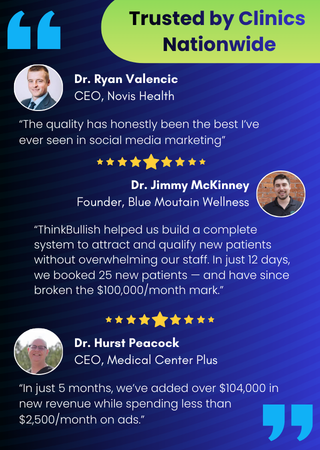
Think Bullish partners with clinics to combine AI qualification, evidence-forward content, and performance pricing that produce measurable patient-acquisition gains. By connecting precision advertising to automated qualification and booking systems—like the AI Patient Coordinator™ and the Patient Recruitment Method™—we’ve helped practices increase consult quality and booking efficiency. Our AI Growth System emphasizes continuous engagement and triple qualification—condition, motivation, and financial readiness—to lift conversion while cutting intake hours. Clinics evaluating vendors often request demos to see how these systems integrate with existing workflows.

How Have AI-Driven Strategies Increased Patient Bookings for Stem Cell Clinics?

When AI-managed intake and follow-up run alongside targeted ad campaigns, clinics see faster lead-to-booking cycles and better booking quality because each lead receives consistent qualification and education. Automated reminders and confirmations reduce no-shows, and triage rules ensure booked consults are clinically appropriate—improving clinician productivity. These results show that integrating AI with paid channels and content raises both the volume and quality of patient acquisition compared with manual processes.

We must actively counter misinformation by giving patients clear, evidence-based information about regenerative treatments.

Engaging Patients and Combating Misinformation in Regenerative Medicine

As patients increasingly look online for health answers, regenerative medicine practices need to challenge misinformation with clear, evidence-based content. That means explaining stem cell and related therapies honestly—benefits, risks, and regulatory status—so potential patients can make informed choices. Well-crafted education builds trust and supports responsible patient acquisition.

Challenging misinformation and engaging patients: characterizing a regenerative medicine consult service, C Smith, 2020

What Metrics Prove the ROI of Performance-Based Regenerative Medicine Marketing?

Measure ROI with metrics that map directly to revenue: cost-per-booking, booking-to-treatment conversion rate, revenue per patient, and payback period. A transparent ROI model multiplies incremental bookings by average treatment revenue and subtracts acquisition costs to calculate payback. If a campaign lowers cost-per-booking while improving booking-to-treatment conversion, margin per marketing dollar increases. Performance-based pricing aligns agency and clinic incentives because payment tracks delivered bookings and documented outcomes—encouraging continuous optimization.

Core ROI metrics and what they reveal:

  1. Cost-per-booking: measures acquisition efficiency.
  2. Booking-to-treatment conversion: measures lead quality and clinical suitability.
  3. Revenue per patient: measures average monetization of each converted booking.

These KPIs help clinics evaluate whether a partner’s performance model delivers sustainable growth and predictable cash flow.

The combination of AI and regenerative medicine is changing patient acquisition by enabling personalized candidate identification and outcome prediction.

AI Strategies for Tissue Engineering and Regenerative Medicine

Integrating tissue engineering and regenerative medicine with artificial intelligence has produced notable advances. AI can analyze complex biological data, support outcome prediction, and help identify suitable candidates—improving acquisition efficiency and personalizing care pathways. These technologies, when paired with rigorous evidence, can raise both clinical and marketing performance.

Recent advances in artificial intelligent strategies for tissue engineering and regenerative medicine, M Gharibshahian, 2024
Frequently Asked Questions

What are the benefits of using AI in regenerative medicine marketing?

AI speeds and standardizes early patient engagement—automating lead response, qualification, and scheduling. That consistency gives prospects fast, evidence-based answers, reduces staff time on intake, increases appointment throughput, and improves booking-to-treatment rates. In short, AI helps clinics focus on care while keeping high-intent patients moving toward consults.

How can clinics ensure compliance with FDA and FTC regulations in their marketing?

Ensure compliance by avoiding unsupported claims, disclosing risks, and documenting the evidence behind outcome statements. Implement a pre-approval workflow that includes clinical and legal review, and run periodic audits of promotional materials. Using clear, qualifying language and maintaining substantiation reduces regulatory risk and builds patient trust.

What role does educational content play in patient acquisition?

Educational content builds trust, reduces uncertainty, and helps patients self-select based on candidacy. Clear, evidence-based formats—videos, guides, FAQs—answer common questions and shorten the path to consult. Well-designed education increases conversion because informed patients are more likely to book and stay engaged.

How can clinics measure the effectiveness of their marketing strategies?

Track KPIs tied to revenue: cost-per-booking, booking-to-treatment conversion, and revenue per patient. Monitor engagement metrics from educational content and seminars to understand interest and optimize messaging. These measures show whether marketing is producing sustainable, profitable bookings.

What are the best practices for creating engaging virtual seminars?

Deliver clinician-led, evidence-based content that addresses real patient concerns. Use interactive elements—Q&A, polls, case explanations—to keep attendees engaged, and structure the seminar to guide participants from awareness to booking. Follow up with targeted materials to nurture interest and convert attendees into consults.

How does semantic SEO improve online visibility for regenerative medicine clinics?

Semantic SEO helps search engines and AI assistants understand your services and candidacy criteria by organizing content around entities and intent. A hub-and-spoke content model, schema markup, and local SEO increase topical authority and capture high-intent queries—bringing more qualified organic traffic to your clinic.

Conclusion

Effective regenerative medicine marketing combines AI-driven automation, clear educational content, and compliance-first messaging to attract higher-quality consults and create predictable pipelines. These approaches streamline workflows, build trust, and improve conversion—helping clinics grow responsibly. If you want marketing that prioritizes patient suitability and measurable bookings, our tailored solutions can help elevate your clinic’s engagement and revenue.