Streamline Patient Intake With AI Solutions

The integration of artificial intelligence (AI) into patient intake is reshaping how medical practices operate. This article examines AI solutions that can drive practice growth, improve patient experience, and optimise operational efficiency. It explains how AI enhances patient interactions, streamlines appointment scheduling, and automates data collection. Faced with issues such as missed calls and slow response times, clinics can apply these solutions to reduce friction. The article presents strategies, technologies, and best practices to leverage AI for better patient flow and revenue outcomes.
AI solutions can significantly enhance medical practice growth, improve patient experience, and optimize operational efficiency in several ways:
AI provides tools that strengthen patient engagement and reduce administrative burden. These solutions improve the patient experience while supporting practice growth through greater operational efficiency. Key impact areas include the following:
Enhanced Patient Interaction
AI improves patient interaction through chatbots and virtual assistants that deliver prompt, consistent responses. These tools enable personalised communication at scale, ensuring patients receive timely information. By matching responses to patient needs, AI increases engagement and satisfaction.
Streamlined Appointment Scheduling

Automated scheduling systems simplify the booking workflow. AI-driven tools allow patients to schedule at their convenience and reduce manual coordination by staff. This improves satisfaction and conversion, as patients are more likely to book appointments when the process is seamless.
Tailored Recommendations
By analysing patient data, AI can generate tailored recommendations for treatments and services. These personalised care suggestions align with patient preferences and clinical history, which supports satisfaction and reinforces the clinic’s clinical expertise.
Automated Data Collection and Analysis
AI automates data capture and analysis, making intake faster and more accurate. These efficiencies free clinical teams to allocate resources where they matter most and enable data-driven decisions that improve patient outcomes and operational performance.
Predictive Analytics
Predictive analytics let clinics anticipate patient needs and behaviour. By evaluating historical data, AI can trigger timely appointment reminders and inform targeted outreach. This proactive approach supports engagement and helps maintain a steady patient flow.
Operational Efficiency
AI automates routine administrative tasks, which reduces clerical workload and allows staff to focus on clinical care. Improved workflows increase throughput without sacrificing quality, supporting both patient care and practice capacity.
Further research corroborates AI’s ability to improve efficiency and patient engagement while reducing staff burden in clinical settings.
AI Medical Assistants: Enhancing Healthcare Efficiency & Patient Engagement
Integrating Artificial Intelligence (AI) into healthcare systems fundamentally transforms clinical workflows by augmenting diagnostics, documentation, and patient engagement. AI-powered medical assistants, driven by Natural Language Processing (NLP) and Machine Learning (ML), facilitate operational efficiency, mitigate clinician burnout, and improve quality and continuity of care. This study critically examines the impact of AI medical assistants on clinical productivity, patient outcomes, and administrative operations. Through a systematic literature review of peer-reviewed studies, case analyses, and empirical evaluations, we identify core use cases where AI contributes measurable gains, such as enhanced documentation accuracy, optimized triage, and reduced clerical workloads.
The transforming clinical practice: The role of AI-powered medical assistants in enhancing healthcare efficiency and decision-making, AS Batista, 2025
Integrated Applications
Cohesive integration ensures different AI tools operate together and exchange data reliably. Aligned systems improve communication, reduce duplication, and create a more efficient patient intake experience across the care pathway.
How Does AI Automate Patient Intake to Reduce Missed Calls?
AI automates intake workflows to reduce missed calls and improve responsiveness. Implementing AI-driven triage and communication tools helps ensure inquiries are addressed promptly, supporting patient acquisition and retention.
Technologies Used
Several AI technologies support automated intake. Chatbots provide 24/7 responses, scheduling systems handle bookings, and machine learning models analyse patient data to predict needs and preferences. Together, these technologies create a more efficient intake process.
Workflow Improvements
AI streamlines communication and automates reminders, which reduces manual tasks and improves staff productivity. With routine work handled by automation, staff can prioritise complex clinical interactions and deliver higher-value care.
Impact on Patient Communication
AI enables personalised, continuous communication that makes patients feel heard and understood. This improved engagement fosters loyalty and increases the likelihood of return visits.
What Are AI Front Desk Receptionists and Their Benefits?

AI front desk receptionists are virtual assistants that handle routine intake tasks. These systems reduce staff workload and improve the patient experience by delivering immediate information and assistance.
How Does Automation Improve Booking Consistency and Lead Conversion?
Automation increases booking consistency and lead conversion by providing 24/7 access to scheduling and follow-up. When patients can book at their convenience, clinics capture more appointments and improve overall satisfaction.
What Operational Bottlenecks Cause Revenue Leakage in Clinics?
Operational bottlenecks such as missed calls and slow response times contribute directly to revenue leakage. These gaps frustrate prospective patients and create lost opportunities for care and revenue.
How Do Missed Calls and Slow Response Times Impact Patient Acquisition?
Missed calls and delayed responses reduce patient acquisition. When prospects cannot reach a clinic or receive late replies, they often seek alternatives, which translates into lost revenue. Addressing these issues is critical to improving acquisition and retention.
What Strategies Fix Clinic Workflow Inefficiencies with AI?
Deploying AI chatbots and automated call systems improves workflow efficiency by ensuring timely responses and faster lead follow-up. These measures increase speed-to-lead and ensure patient inquiries are resolved promptly.
How Can Compliance Automation Enhance Patient Intake Processes?
Compliance automation supports accurate data capture and dynamic content optimisation, helping clinics meet regulatory requirements while reducing manual effort. This reduces administrative delays and improves intake quality.
What Are Common Compliance Delays in Patient Intake?
Compliance delays typically result from missing information and processing lag. Such gaps stall intake workflows and detract from the patient experience.
How Does AI Accelerate Compliance and Reduce Errors?
AI accelerates compliance by enabling rapid data collection and tailored intake forms. This reduces errors and helps clinics satisfy regulatory requirements without compromising care.
What Are the Best Practices for Clinic Appointment Scheduling Software?
Best practices include automated appointment booking, scheduled reminders, and intuitive user interfaces. These features streamline scheduling for both patients and staff and reduce administrative overhead.
How Does AI Improve Appointment Scheduling and Reduce No-Shows?
AI improves scheduling by sending automated reminders and applying predictive insights to identify likely no-shows. This proactive approach lowers no-show rates and keeps patient flow consistent.
Studies further describe how advanced AI models can predict and manage patient no-shows, enabling better resource allocation and service delivery.
AI for Patient No-Show Prediction & Appointment Optimization
The “no-show” problem in healthcare refers to the prevalent phenomenon where patients schedule appointments with healthcare providers but fail to attend them without prior cancellation or rescheduling. In addressing this issue, our study delves into a multivariate analysis over a five-year period involving 21,969 patients. Our study introduces a predictive model framework that offers a holistic approach to managing the no-show problem in healthcare, incorporating elements into the objective function that address not only the accurate prediction of no-shows but also the management of service capacity, overbooking, and idle resource allocation resulting from mispredictions. This comprehensive strategy enables healthcare providers to optimize resource allocation and improve service delivery, making our findings relevant for healthcare systems globally facing similar challenges.
Predictive optimization of patient no-show management in primary healthcare using machine learning, A Leiva-Araos, 2025
What Features Should Medical Practices Look for in Scheduling Tools?
Practices should prioritise tools that offer automated reminders, AI chatbot integration, and mobile accessibility. These features improve the patient experience and increase engagement.
How Does Patient Acquisition Pipeline Engineering Drive Practice Growth?
Patient acquisition pipeline engineering optimises the steps that convert prospects into patients. By refining acquisition workflows, clinics improve engagement and retention, which supports revenue growth.
What Is the Role of AI in Optimizing Patient Acquisition Pipelines?
AI contributes predictive analytics and automated data capture that allow clinics to tailor their marketing efforts and improve patient engagement.
How Does Think Bullish Provide Scalable Patient Flow Solutions?
Think Bullish provides scalable patient flow solutions designed for clinic-specific challenges. With emphasis on speed-to-lead and triple qualification, Think Bullish helps optimise patient acquisition processes.
To further enhance your clinic’s online presence, consider exploring SEO strategies tailored for medical practices. Optimising website content can improve visibility and attract more patients.
What Evidence Supports ROI From AI-Powered Patient Intake Solutions?
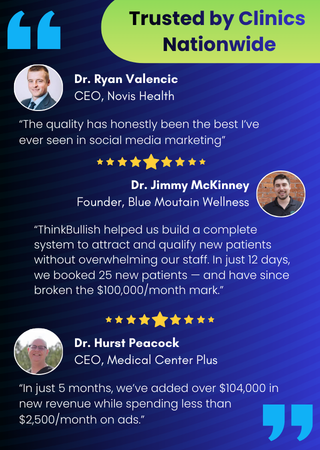
Evidence of ROI includes higher booking volumes and improved revenue metrics. Case studies show clinics realising tangible benefits from AI front desk receptionist solutions.
Which Metrics Demonstrate Increased Bookings and Revenue?
Relevant metrics include conversion rates and patient retention figures. These indicators quantify the impact of AI on patient acquisition and long-term value.
How Have Clinics Benefited from AI Front Desk Receptionist Implementations?
Clinics report measurable gains after implementing AI receptionists, including higher conversion rates and lower no-show rates. These outcomes demonstrate the value of AI in intake workflows.
For clinics seeking further operational efficiency, exploring AI front desk receptionist solutions can reduce workload and enhance the patient experience.
Frequently Asked Questions
What are the potential challenges of implementing AI in medical practices?
Implementation challenges include staff resistance to change, the need for training, and concerns about data privacy and security. Integrating AI with existing workflows and meeting regulatory requirements can be complex. Practices should adopt a clear strategy and secure leadership support to manage the transition.
How can AI improve patient retention rates?
AI improves retention by enabling personalised communication and timely outreach. Predictive analytics identify patients at risk of disengagement and trigger tailored reminders or follow-up. AI-driven chatbots provide consistent support, which strengthens patient loyalty.
What role does data security play in AI patient intake solutions?
Data security is critical because intake systems handle sensitive patient information. Compliance with regulations such as HIPAA is mandatory. Clinics should deploy encryption, secure access controls, and regular audits to protect data and maintain patient trust.
How does AI impact the role of healthcare staff?
AI automates routine administrative duties, allowing staff to focus on complex clinical tasks. This reallocation can increase job satisfaction but also requires training and change management to ensure a smooth transition.
What are the long-term benefits of using AI in patient intake processes?
Long-term benefits include greater operational efficiency, improved patient satisfaction, and increased revenue. Streamlined intake and personalised interactions lower costs and support higher retention, contributing to sustainable practice growth.
Can AI solutions be customized for different types of medical practices?
Yes. AI solutions can be tailored to the workflows and patient populations of primary care, dental, and specialty practices. Customisation may involve adjusting predictive models, adding specific scheduling features, or developing specialised chatbots to meet practice needs.
Conclusion
Integrating AI into patient intake provides clear benefits: enhanced engagement, streamlined operations, and improved revenue potential. By automating routine tasks and personalising interactions, clinics can deliver a more efficient and satisfying patient experience. Adopting these technologies addresses current challenges and positions practices for sustainable growth. Discover how our tailored AI solutions can transform your clinic today.